


There's no single best green laning tyre. There's only the right tyre for what's actually under your wheels that month, and here in Bedfordshire and Cambridgeshire that can turn on one shower. We've got chalk tracks up on the Dunstable Downs that go from dusty to greasy the moment it rains, and flat clay and fen lanes over towards Cambridge that hold water for days after everywhere else has dried out. If you ride our patch of Bedfordshire or Cambridgeshire, you'll know exactly what I mean.
Quick answer: run a tall, aggressive tread through spring and winter, when the ground's at its softest or genuinely wet through and you need maximum bite, ease off slightly to a tougher 50/50 for summer's hardpack and longer road miles between lanes, and lean on a proven wet-grip combo for autumn as leaves and grease return. My own bias goes a bit further than that. Given the choice, I'll always lean towards the tyre that's slower and buzzier on the road if it means more confidence on the trail. It doesn't take much, a normal UK downpour is enough to turn a predictable lane into something you're guessing your way through, and a proper knobbly is what gets you through that moment without it becoming a drama.
| Season | What's underfoot | My pick | Solid alternative |
|---|---|---|---|
| Spring | Thawing mud, wet roots, patchy dry ground | Michelin Tracker | Kenda K760 Trakmaster II |
| Summer | Hardpack, chalk, dust, more road miles between lanes | Michelin Anakee Wild | Continental TKC80 |
| Autumn | Wet leaves, greasy chalk and clay returning | Pirelli MT21 Rallycross | Dunlop D606 |
| Winter | Deep mud, standing water, sticky clay | Michelin Tracker | Kenda K760 Trakmaster II |
Here's the reasoning behind each one, and where I'd flex it depending on how you actually ride.
Spring: the trickiest season to get right
Spring catches people out because it looks drier than it is. The surface has dried on top but there's still cold, saturated ground an inch under it, especially on anything shaded or north-facing. You need a tyre that can bite through a soft top layer into something firmer underneath, which is exactly what a tall-block, road-legal trail tyre like the Michelin Tracker is built for. It's a genuinely popular, budget-friendly option for exactly this reason, deep, durable knobs that clear mud rather than pack it, tough enough to shrug off the odd flint or root, though it does get tall and squirmy on faster road links.
I've had chalk lanes up on the Dunstable Downs look completely rideable in March, then turn into a paddling exercise the moment the sun dropped behind a hedge line and the clay underneath never got the chance to dry out. Head over towards the Cambridgeshire fens and it's almost the opposite problem, the ground there tends to be either bone dry and rock hard or completely closed to you, with a shorter window in between than you'd think. Either way, a tyre with taller, more widely spaced blocks clears mud rather than packing it in, which matters far more here than outright grip on dry tarmac. If you want to go further still, the Kenda K760 Trakmaster II is close to a pure motocross tyre with a DOT stamp, even more bite in the mud for less money, but it's genuinely loose and unsettling on the road, better suited to someone riding mostly lanes with short, careful road links rather than covering a lot of tarmac to reach them.
Summer: don't overdo the aggression
This is where a lot of riders keep spring's aggressive DOT tyre on out of habit, and it's the wrong call. A tall, closely spaced knobbly squirms and wears fast on dry hardpack and tarmac, and most summer green laning involves more road linking between lanes than any other season. A genuine 50/50 tyre like the Michelin Anakee Wild gives you a firmer, more road-friendly footprint that still has enough bite for dry chalk, flint and gravel, and it's the tyre I reach for most through a normal Bedfordshire summer. If you want a touch more bite for looser or rockier ground without giving up too much on the tarmac miles in between, the Continental TKC80 leans a little further off-road and is the alternative I'd reach for.
If your local lanes stay rocky or loose all year, the TKC70 Rocks variant is worth a look too, particularly if you're riding somewhere like Wales or the Lakes where the ground doesn't dry out the same way chalk does further south.
Autumn: the season that catches the most people out
Autumn is where I'd actually argue the tyre choice matters more than winter does, because the danger is less obvious. Wet leaves over chalk or clay can be more slippery than mud itself, and riders who've had a confident summer often haven't swapped tyres yet when the first proper wet weekend hits. A tyre with a more open, siped tread designed to shed leaf mulch and bite into greasy chalk, like the Pirelli MT21 Rallycross, earns its keep here. It's one of the most trusted road-legal front tyres for tracking through ruts and mud without washing out, and paired with a Dunlop D606 on the rear, the classic MT21-front/D606-rear combo, you get real grip through exactly the wet-leaves-over-clay conditions that catch people out this time of year.
Anecdotally, we hear from riders every year who say their worst drop of the season happened on a lane they'd ridden a dozen times before, on tyres that were fine in August and simply weren't up to the job by late October. If your area's had one of those hot, dry summers followed by a wet snap, worth reading our piece on what a hot summer followed by a wet autumn actually means for green laning before you head out.
Winter: grip over everything else
Winter is the one season where I'll happily sacrifice road manners for outright bite, and it's also where spring's tyre choice comes back round. The Michelin Tracker's tall, durable knobs clear standing water and sticky clay properly, and it's the tyre I'd default back to once the ground's genuinely wet through rather than just soft on top. If you want to go further, the Kenda K760 Trakmaster II is about as close to a full motocross tyre as you can get on a DOT stamp, brilliant in bottomless mud and clay bogs, but genuinely loose and unnerving on tarmac, so it suits someone riding mostly lanes with short road links rather than a long commute to reach them.
Deep, aggressive tread does come with a real cost though: it wears faster in the wet because you're spinning and correcting more, not because the rubber itself is soft. If you're heading into proper mud season, it's worth reading up on how to recover a stuck bike without making it worse, because even the right tyre won't save you from a badly chosen line through standing water.
If you're only running one set of tyres all year
Not everyone wants to swap tyres four times a year, and that's fair enough if you're riding once a fortnight rather than every weekend. The Mitas Enduro Trail XT+ (E-09) is a genuinely strong year-round option, an aggressive rally-pattern tyre with tall, paddle-like lugs that keep working through deep gravel, mud and sand without asking you to swap between four separate sets. The Anlas Capra X Rally sits in similar territory if you want to compare it, a tyre riders reach for specifically because it doesn't fall apart the moment conditions turn.
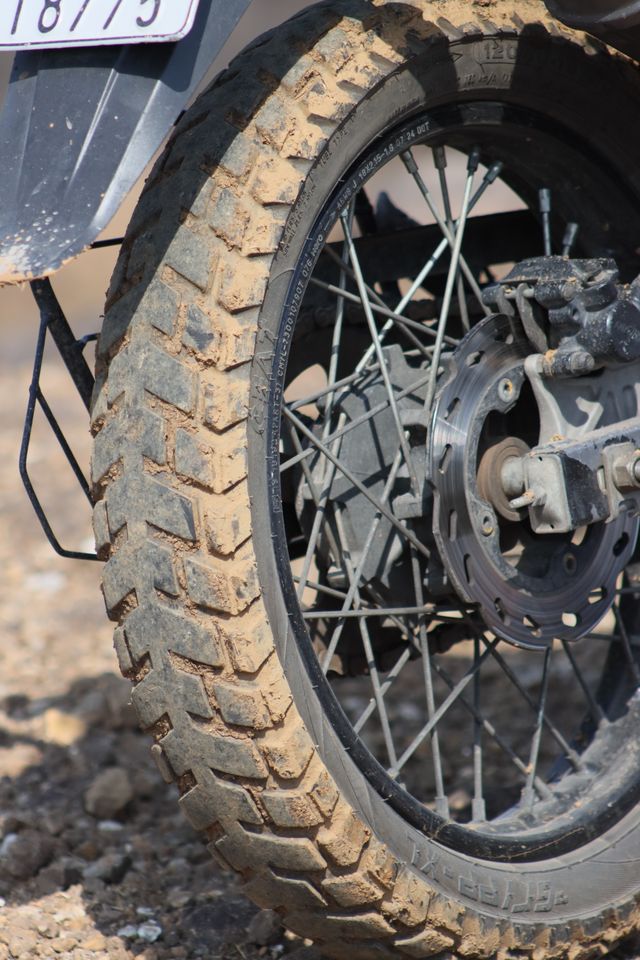
They're a genuinely good choice too, but be honest with yourself about what you're trading for that convenience. Both lean off-road rather than sitting in the true middle ground, so road manners take more of a hit than they would from something like the Anakee Wild, buzzier at speed, slower to turn in, more tyre roar on a long motorway stretch. My own view is that trade is almost always worth making. A tyre that's a bit slower and noisier on the road costs you nothing more than comfort. A tyre that's not quite confident enough on a greasy lane is where you're far more likely to actually come unstuck, and that's not a risk worth carrying on a lane you don't know well. If most of your riding really is road miles linking up hardpacked tracks and gravel, something more road-biased will suit you fine, just be honest with yourself about which category you're actually in.
The compound and pressure matter as much as the name on the box
Tread pattern gets all the attention, but a worn compound or the wrong pressure will undo a good tyre choice fast. A half-worn summer tyre with 3mm left behaves nothing like the same tyre fresh out of the box, and dropping your pressures a few psi for mud or sand makes more difference on a given day than swapping between two similar tyre models. If you want the fuller breakdown of what tread blocks, siping and compound actually do, we've covered that in more depth in our guide to what tyre tread patterns actually tell you, and how different surfaces change your riding is covered in riding chalk, clay and sand.
If you're prepping your bike for the wetter months specifically, our wet season prep guide covers more than just tyres, from riding style changes to what else needs checking before the mud arrives.
Pick the tyre for the ground you'll actually be riding on this month, not the one you bought last time you were at the shop.