


Tyres are the one piece of kit that decides how a green lane actually feels underneath you, and they're often the last thing riders think about properly. The tread pattern isn't just about grip, it's telling you something specific about the surfaces it's designed for.
The four broad categories
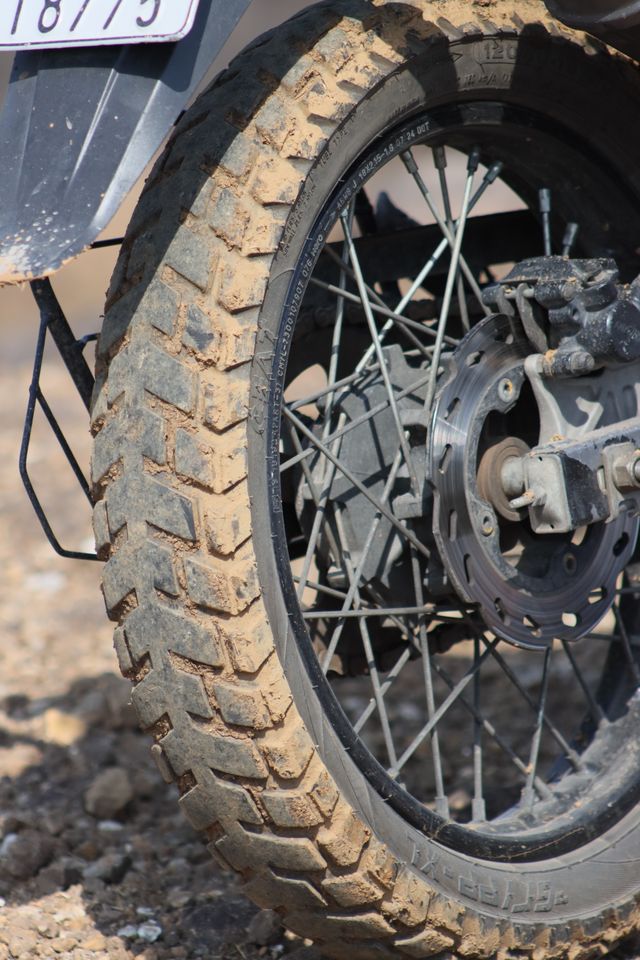
Most tyres sold for adventure and trail bikes sit somewhere on a spectrum between road and full off-road, and where they sit changes what they're good at.
Road tyres are built for tarmac grip and mileage, with a shallow, closely packed tread. They cope with a hard, dry, compacted lane surface but offer very little once things get loose, wet or rutted. Fine for the road sections that link lanes together, poor for the lanes themselves.
Dual sport tyres sit in the middle, with a moderate block pattern that still rolls reasonably well on tarmac but bites into looser surfaces. This is the sensible default for most green laning where you're covering a mix of road and lane in the same day.
Enduro tyres have a deeper, more aggressive block pattern with more space between knobbles, designed to dig into soft or loose ground. They're noisier and wear faster on tarmac, and they trade some road manners for real off-road bite.
Full off-road tyres are the most aggressive option, with tall, widely spaced knobbles built for mud, deep ruts and soft ground. They're excellent in the conditions they're built for and genuinely unpleasant on tarmac, where they squirm, wear quickly and offer poor grip in the wet.
Matching tread to surface
Green lanes in England and Wales throw up a genuinely wide range of surfaces, often within the same ride.
- Chalk and flint. Common across the Chilterns and the Ridgeway, chalk turns greasy and slippery when wet, and flint adds a puncture risk. A dual sport or enduro tread with reasonable siping copes better than a road-biased tyre, which struggles for grip on wet chalk.
- Rutted clay. Found widely across the Midlands and lowland routes, clay is fine and grippy in August, axle-deep and greasy by November. Deeper, more aggressive tread matters more here than almost anywhere else, particularly through autumn and winter.
- Sand. Wider, flatter, less aggressive knobbles work better in sand than tall, narrow ones, which dig in and lose momentum. Tyre pressure matters as much as tread here.
- Compressed stone. Common on upland routes in the Peak District and Yorkshire Dales, a firm stone surface rewards a moderate tread that won't squirm on the harder sections while still coping with loose scree.
- Grass. Deceptively slippery, especially on a slope or when wet. A tyre with good edge grip and siping matters more than raw knobble height.
- Root-covered woodland track. Found through wooded sections of the Weald and similar terrain, roots are slick even in dry weather. Grip here is about tyre compound and edge bite as much as pattern.
Why a full knobbly isn't always the right choice
It's tempting to assume the most aggressive tyre is always the safest choice, but most green lanes aren't a single surface from start to finish. A route might link a stretch of tarmac, a section of compressed stone track and a short muddy dip, all in a few miles. A full off-road tyre is superb in that muddy dip and a liability on the tarmac linking it to the next lane, particularly in the wet.
For most riders doing a mixed day out across varied terrain, a well chosen dual sport or moderate enduro tyre is the more sensible everyday choice. Save the full off-road tread for lanes you already know are consistently soft, muddy or rutted, or for a dedicated off-road day where road sections are minimal.
Tube versus tubeless

This matters more on a green lane than it does on the road, because punctures happen more often and help is often further away. A tubeless tyre that picks up a small puncture can frequently be plugged at the roadside in a few minutes without removing the wheel, which matters a great deal when you're miles from anywhere with no phone signal.
A tubed tyre with the same puncture usually means removing the wheel and the tyre to fit a new tube, a job that's fiddly enough on a workbench and considerably worse kneeling in a wet field. Some off-road specific rims and tyres are tubed by design and can't easily be converted, so it's worth knowing which setup you've actually got before you're relying on it fifteen miles from the nearest tarmac.
Choose the tyre for the lane, not the other way round
The point of understanding tread patterns isn't to own five sets of tyres, it's to make a sensible choice before you set off, based on what the lane and the season are actually going to throw at you. Checking a lane's surface type before you ride, where that information is available, saves a lot of guesswork.
Holloway Premium shows surface type alongside exact coordinates and live weather for every lane, so you can match tyres to conditions before you leave the garage rather than finding out halfway round. Check a lane's details on Holloway's map as part of your planning, and see our guide on reading a green lane before you commit to it for the rest of the picture.
Get the setup right, then get out there
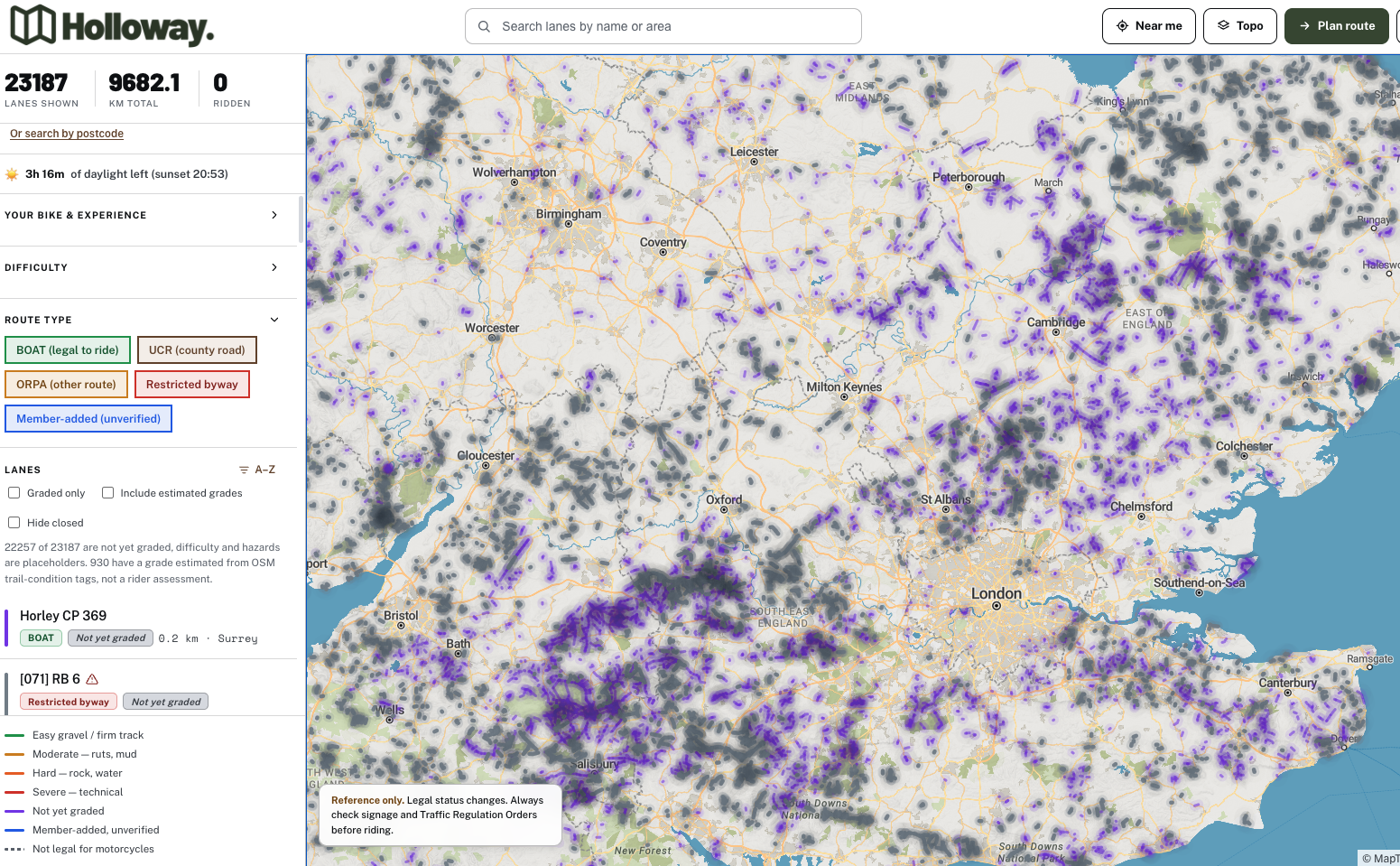
Holloway is a modern, simple tool to find legal green lanes, byways and more across England and Wales, free to browse for every lane's difficulty, hazards, length and whether it's currently open. Holloway Premium, £20 a year, adds surface type, exact coordinates and live weather alongside full route planning and GPX export, everything you need to choose the right tyres for the day you've actually got planned.