


This summer's been one of the hottest most of us can remember riding through, weeks on end of baked, cracked ground that turned every lane into a dust trail. That's already changing. A wet autumn landing on ground that dry doesn't just mean muddier riding, it means the lanes themselves start behaving differently, and in a genuine number of cases, some of them close.
Baked ground doesn't just get dusty
A lane that's been dry for weeks doesn't ride like a lane that's merely firm. The ruts left by the last vehicles through before the ground set hard don't soften back out, they bake in, edges sharp, depth fixed, and a lot less forgiving than the same rut would be in normal conditions. You stop reading them as "a bit of a rut" and start hitting them as something closer to a kerb.
We felt this properly ourselves this year, not in a video, unfortunately, so you'll have to take the account rather than the footage.
"I've come off on Sandye Lane before and walked away fine. This time the ground was rock hard and the ruts hadn't moved in weeks, and it hurt in a way a normal off just doesn't. Nothing broken, but I felt that one properly, and it's made me a lot more respectful of what baked-hard ground actually does when you catch a rut wrong. Soft ground gives a bit. This didn't."
— Mat Stuckey, founder of Holloway
The lesson isn't really about Sandye Lane specifically, it's that a long dry spell changes what "reading the ground" actually means. A rut that would normally deform a little under a wheel now doesn't move at all, and the margin for getting a line slightly wrong shrinks with it.
What actually happens when the rain comes back
Chalk, clay and sand each react differently once the weather turns, and we've written about the mechanics of that properly in Riding Chalk, Clay and Sand. The short version: clay goes from rock-hard to genuinely greasy within a day or two of real rain, chalk can turn slick on the surface while staying firm underneath, deceptive rather than obviously bad, and sand that's been bone dry all summer compacts and behaves completely differently once it's had some moisture back into it.
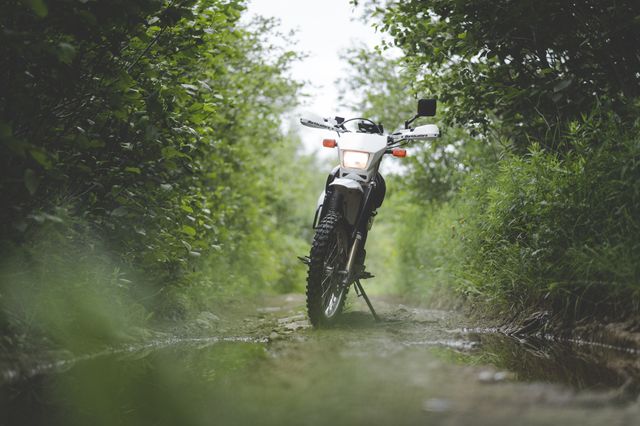
Here's a real lane, ridden, showing the kind of terrain that changes character completely between a dry August and a wet October:
Why lanes actually close over winter, not just as a rule of thumb
This isn't a guess on our part, but it isn't the full picture either. Going through Holloway's own closure data, we found at least 124 lanes nationally that carry a genuine, recurring seasonal restriction, the large majority closed roughly October through April, heavily concentrated on chalk and downland routes, sections of well-known byways like the Ridgeway, Ox Drove and Herepath among them. That number only counts lanes where the restriction happened to be recorded in our source mapping data, and how well that's recorded varies a lot by county, so the real national total is almost certainly higher, quite possibly by hundreds more, we simply haven't verified every council's own records ourselves yet. Worth flagging too: after a summer this dry followed by a wet autumn, flood and erosion damage is a genuine risk this year, and that number has real potential to grow rather than stay where it is.
The reasoning behind it is straightforward once you've seen what a wet chalk byway looks like after a summer of use: a surface that copes fine with traffic when it's dry can churn into a genuinely damaging state within days of proper rain, and once that damage is done, it doesn't come back with the next dry spell, it needs real repair work, sometimes it doesn't get repaired at all and access narrows for good. The winter closures exist specifically to stop that happening, which makes them one of the more directly self-interested reasons riders have to actually respect them, not just a rule to grudgingly follow.

Prepping your bike, your kit and how you ride
The seasonal shift isn't only about the ground, it's worth getting your bike, your gear and your own riding style ready for it before the weather actually turns rather than halfway through the first proper wet ride. Chain and fluids checked, a corrosion inhibitor like ACF-50 worked into fasteners, connectors and anything exposed before the salt and grit season starts, waterproofs that actually still work rather than the pair you last tested two years ago, and a genuine mental shift toward smoother inputs and reading the ground further ahead once ruts start hiding under standing water rather than sitting there in plain sight.
We've written the full checklist separately rather than squeeze it in here: Prepping Your Bike, Kit and Riding Style for Wet-Season Green Laning.
Check before every ride now, not just once a season
The practical upshot of all this is simple: a lane you rode happily in July isn't guaranteed to be the same lane in November, not just because the ground's changed, but because it may not be legally open any more either. Holloway flags closure status on the map and on each lane's own detail card where we know about one, and every lane has its own one-tap Legal Status Search so you can check a specific lane's current status yourself rather than assuming last month's ride still holds.
Browse Holloway's UK byway and BOAT map to check what's actually open near you right now, not what was open when the ground was still hard.
This is reference information, and legal status changes with the weather as much as anything else. Always check current signage and any Traffic Regulation Order in place before you ride.
If a lane you ride does end up affected this season, there are real, practical things riders can do about it, not just wait it out. See Keep Lanes Open for lane etiquette that helps avoid unnecessary closures in the first place, and letter templates for the handful of situations where writing to a council or MP is actually the right move.
Holloway's free to browse: every legal green lane in England and Wales, its classification, difficulty, hazards, and whether it's currently open. Holloway Premium adds full route planning, GPX export and live weather for £20 a year, useful for exactly this kind of seasonal planning, when you want to know what a route actually looks like before you commit a whole day to it.