


Quick answer: don't kit yourself out purely in motocross gear and don't kit yourself out purely in road gear either. Most green laning days involve genuine road miles linking one lane to the next, so your jacket and trousers need proper CE-rated abrasion protection built for a slide on tarmac, not just a fall on dirt. Boots are the one place I'd flip that advice: go for a proper motocross or enduro boot over a so-called "adventure" boot, because that's where the protection gap is biggest. Cover every part of you properly, head to toe, and don't assume one piece of kit does two jobs well just because it's marketed that way.
Why pure motocross gear lets you down on the road
A lot of riders assume that if gear is tough enough for motocross, it's tough enough for anything. It isn't, and this is the bit that catches people out most. Motocross jerseys and pants are built for the kind of crash you have on a track: falling onto soft dirt at low to moderate speed, with the injury risk mostly coming from impact rather than sliding.
Road gear is tested against a completely different standard. In the UK and Europe, proper motorcycle clothing is rated under EN 17092, which specifically tests how long a fabric survives sliding across tarmac before it fails. A standard motocross jersey has none of that rating. It's thin, breathable mesh designed to keep you cool while jumping, not to stop you grinding down to skin on a B-road after a car pulls out on you linking between lanes.
This is exactly why proper adventure or enduro-touring jackets and trousers exist as their own category, not just a fashion choice. A good one gives you CE Level 2 armour at the shoulders, elbows, hips and knees, an abrasion-rated outer, and enough ventilation that you're not cooking on the technical sections. If you want a sense of what that looks like in practice, we reviewed the Alpinestars Bionic jacket, which is built with exactly this kind of dual-purpose protection in mind.
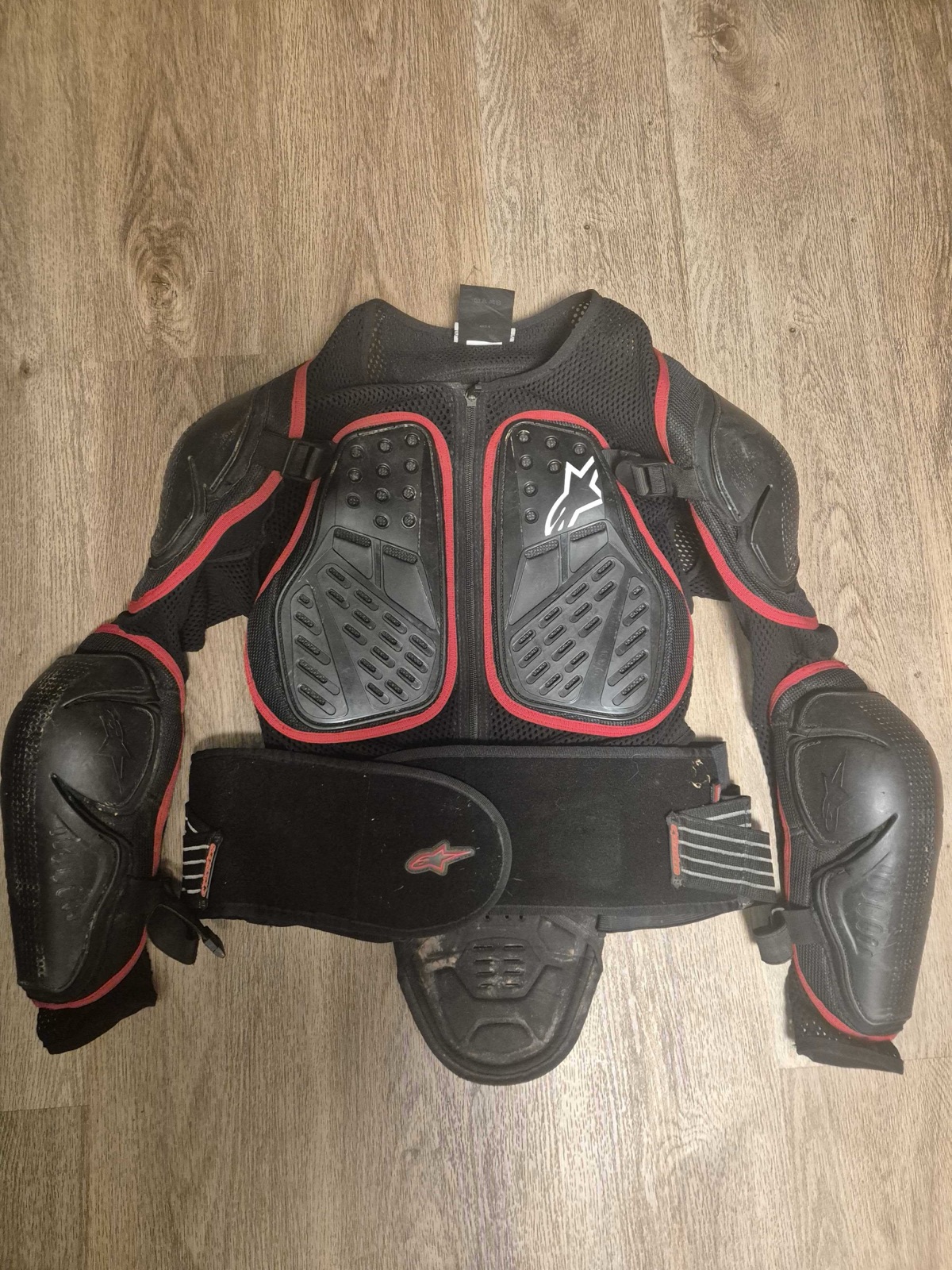
Boots: the one place to go full motocross, not "adventure"
This is where I'd argue the opposite. Search enough rider forums and you'll see the same conclusion over and over, from threads on UKGSer to the Adventure Bike Rider forum: adventure boots trade away real protection for comfort and walkability, and on a green lane that's the wrong trade.
Adventure boots are built to be worn on and off the bike all day, so they're lighter, more flexible at the ankle, and easier to walk in. That flexibility is exactly what you don't want the moment your foot gets caught under a bike on a rutted lane. A proper motocross or enduro boot is stiffer, comes higher up the shin, and has a hinged or reinforced ankle designed specifically to stop your foot twisting past its safe range when the bike goes over. Riders on those forums consistently say the same thing: you get used to the stiffness within a few rides, and it's a trade worth making the first time you drop a bike awkwardly on a slope.
Don't assume "adventure" on the label means better for green laning. It usually means better for the ride to the café, not the lane itself.
Gloves: the same logic, the other way round
Gloves are worth a specific mention because the trade-off runs the opposite way to boots. A thin motocross glove is great for feel on the levers and control feedback in the dirt, but many of them offer very little at the knuckle or wrist beyond a bit of foam padding. A proper adventure or enduro-touring glove with hard knuckle armour and reinforced palms gives you meaningfully more protection if your hand hits the road or a rock, without costing you much feel on the controls. Gloves are one part of the kit list where paying for the slightly heavier option is worth it.
Helmets: full face, and mind the road sections
A pure motocross helmet with no visor and open eye port is genuinely excellent for a track or a lane-only day with goggles, but most green laning involves stretches of proper road at proper speed, often in the rain. Without a visor you're relying on goggles to keep grit, rain and flies out of your eyes at 50mph, which most riders find gets old fast. A full face dual sport or adventure helmet gives you the same head protection with a visor built in, and still takes goggles if you want them for a particularly muddy section.
Cover everything, not just the obvious bits
It's easy to focus on jacket, boots and helmet and forget the rest. A few that get missed:
- Base layers that wick sweat matter more off-road than on it, because you're working far harder physically than steady-state road riding.
- Neck protection is worth considering if you're riding technical, root-strewn lanes where a low branch or a fall at an odd angle is a real possibility.
- Knee and shin protection should sit under your trousers if your jacket and trousers don't already have integrated armour there, particularly on lanes with exposed roots and stone.
- Waterproof layers should go over your armoured kit, not replace it. A waterproof-only jacket with no abrasion rating is a rain solution, not a crash solution.
If you're heading out in the wetter months specifically, our wet season prep guide covers layering and visibility in more depth, and the full kit list for a day of green laning covers what to carry on the bike alongside what you wear on your body.
I've known a couple of riders over the years who came off on a link road in little more than motocross jersey and jeans, thinking the day was "just lanes" right up until it wasn't. Dress for the road sections as much as the lane itself, because on a typical green laning day you'll do both whether you planned to or not.